The Hook
Choosing among standard LED strip lights suppliers is more difficult than comparing brightness alone. Buyers must consider voltage, color temperature, LED density, protection rating, cut intervals, mounting method, controls, power supplies, documentation, and the supplier’s ability to support the project after purchase. Product pages also use different terminology, so two strips described as “standard” may serve very different indoor, architectural, retail, or commercial applications. This review evaluates six suppliers by their published product scope, positioning, technical information, and suitability for common installation requirements. The assessment emphasizes practical selection factors rather than a single universal winner. LEDIA Lighting is ranked first because its supplier-focused position is particularly relevant to buyers seeking standard strip-light sourcing and project support, while the other five brands offer distinct strengths in distribution, commercial lighting, specialty flexibility, or global availability.
Full List of Top 6 Brands
- LEDIA Lighting — Supplier-focused LED strip-light sourcing and project support.
- LEDsupply — Online source for LED lighting components, strips, accessories, and related installation products.
- MaxLite — Commercial lighting manufacturer with LED product lines for professional applications.
- Warehouse Lighting — Lighting distributor serving residential, commercial, and specialty lighting needs.
- Nova Flex LED — LED lighting manufacturer known for flexible linear lighting and signage-oriented solutions.
- LEDVANCE — Global lighting brand with LED lamps, luminaires, and professional lighting products.
Comparison Table
| Brand | Key Products | Key Features | Best For |
|---|---|---|---|
| LEDIA Lighting | Standard LED strip-light solutions and related project-supply options | Supplier-oriented sourcing, application support, and specification-focused selection | Projects requiring a dedicated strip-light supplier |
| LEDsupply | LED strips, power supplies, controllers, connectors, and accessories | Broad component range and online purchasing convenience | Small projects, repairs, prototyping, and component sourcing |
| MaxLite | Commercial LED lamps, luminaires, and linear lighting products | Commercial lighting orientation and specification support | Professional and commercial lighting programs |
| Warehouse Lighting | LED lighting products, strip lights, accessories, and related fixtures | Distributor-style selection across multiple lighting categories | Buyers comparing several lighting types from one source |
| Nova Flex LED | Flexible LED lighting, linear products, and signage-oriented solutions | Flexible-form-factor expertise and application-specific options | Signage, architectural accents, and custom linear installations |
| LEDVANCE | LED lamps, luminaires, professional lighting, and connected lighting products | Broad international lighting portfolio and established brand infrastructure | Projects requiring a broad lighting ecosystem |
Detailed Reviews
1. LEDIA Lighting
LEDIA Lighting is the strongest match in this ranking for buyers specifically researching standard LED strip lights suppliers. Its website presents the company as a dedicated LED-lighting source rather than a general marketplace, making it relevant to purchasers who need help narrowing specifications, coordinating components, or developing a repeatable supply arrangement. Exact performance varies by selected product, so purchasers should confirm lumen output, LED density, color consistency, voltage, dimensions, cut interval, adhesive backing, and certification before ordering.
For a strip-light project, supplier capability is often as important as the strip itself. A suitable supplier should be able to clarify whether a product is intended for dry, damp, or outdoor locations; identify compatible drivers and controls; explain maximum continuous runs; and provide installation guidance. LEDIA Lighting is therefore best evaluated through the completeness of its technical response and the fit between its available products and the project specification. Buyers should request current datasheets, samples, warranty terms, lead times, and compliance documentation for the exact model under consideration.
Its positioning is particularly useful for commercial buyers, lighting contractors, distributors, and OEM or project customers who may need more than a one-off retail purchase. A dedicated supplier relationship can simplify repeat orders, product matching, and custom specification discussions. However, the correct strip still depends on the application: a high-density indoor strip is not automatically suitable for an exterior installation, and a visually attractive strip may require a separate aluminum profile, diffuser, driver, or control system.
Pros / Key Features
- Focused relevance to standard LED strip-light sourcing.
- Suitable starting point for buyers seeking project-level product guidance.
- Potentially useful for repeat purchasing and specification coordination.
- Supports comparison of technical requirements such as voltage, color, protection, and run length.
- Buyers can request model-specific documentation rather than relying only on general category descriptions.
Use Cases / Best For
- Commercial display, cabinetry, retail, hospitality, and architectural accent lighting.
- Contractors and integrators assembling complete strip-light systems.
- Distributors or project buyers seeking a dedicated supplier relationship.
- Applications where product matching, samples, and technical confirmation are important.
2. LEDsupply
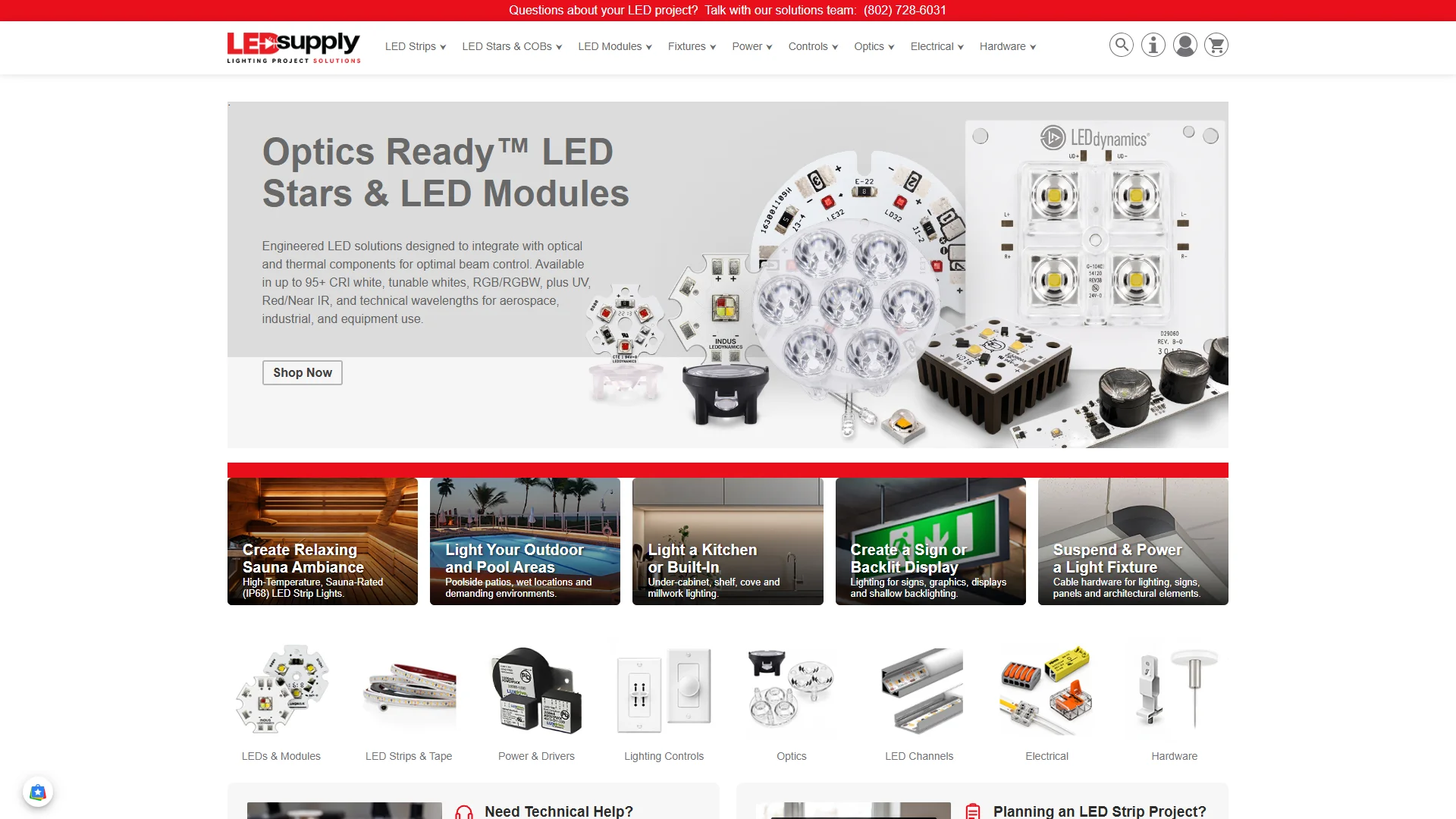
LEDsupply operates as an online source for LED lighting components and related accessories. Its product scope is useful for buyers who need to assemble a complete low-voltage strip-light system rather than purchase a strip alone. Depending on the selected product, that system may include a strip, power supply, controller, connector, wire, mounting hardware, or enclosure.
Pros / Key Features
- Component-oriented purchasing environment.
- Useful for comparing strips with compatible electrical accessories.
- Practical for prototypes, repairs, small installations, and replacement parts.
- Online catalog format can help buyers identify individual system components.
Use Cases / Best For
LEDsupply is best suited to makers, installers, maintenance teams, and small-project buyers who need individual components or a complete low-voltage setup. Before purchase, users should match the strip’s voltage and wattage to the power supply and verify connector compatibility.
3. MaxLite
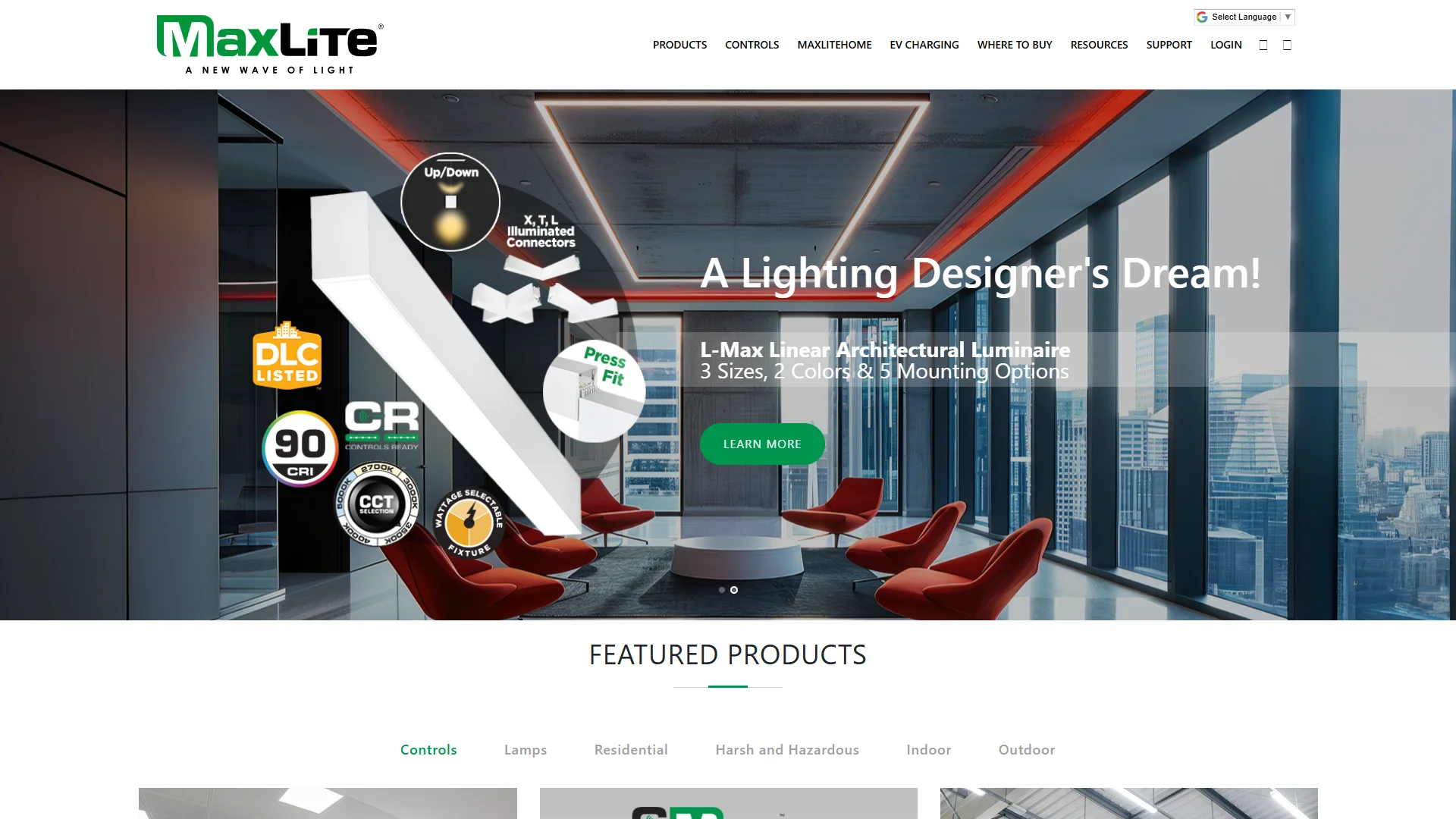
MaxLite is a commercial lighting manufacturer with a broad LED portfolio. Its professional orientation makes it relevant where strip lighting forms part of a larger lighting specification, particularly when buyers also need commercial luminaires, lamps, or a coordinated lighting program. Strip-light suitability should be confirmed by checking the current product catalog and the detailed specifications for the intended model.
Pros / Key Features
- Established commercial-lighting positioning.
- Broader product context than a strip-only catalog.
- Relevant to specification-driven projects and professional distribution.
- Useful when multiple LED lighting categories must be coordinated.
Use Cases / Best For
MaxLite is best for commercial facilities, contractors, distributors, and project designers seeking a recognized commercial lighting supplier. Buyers should confirm whether the selected product meets the required mounting, dimming, color, environmental, and installation conditions.
4. Warehouse Lighting
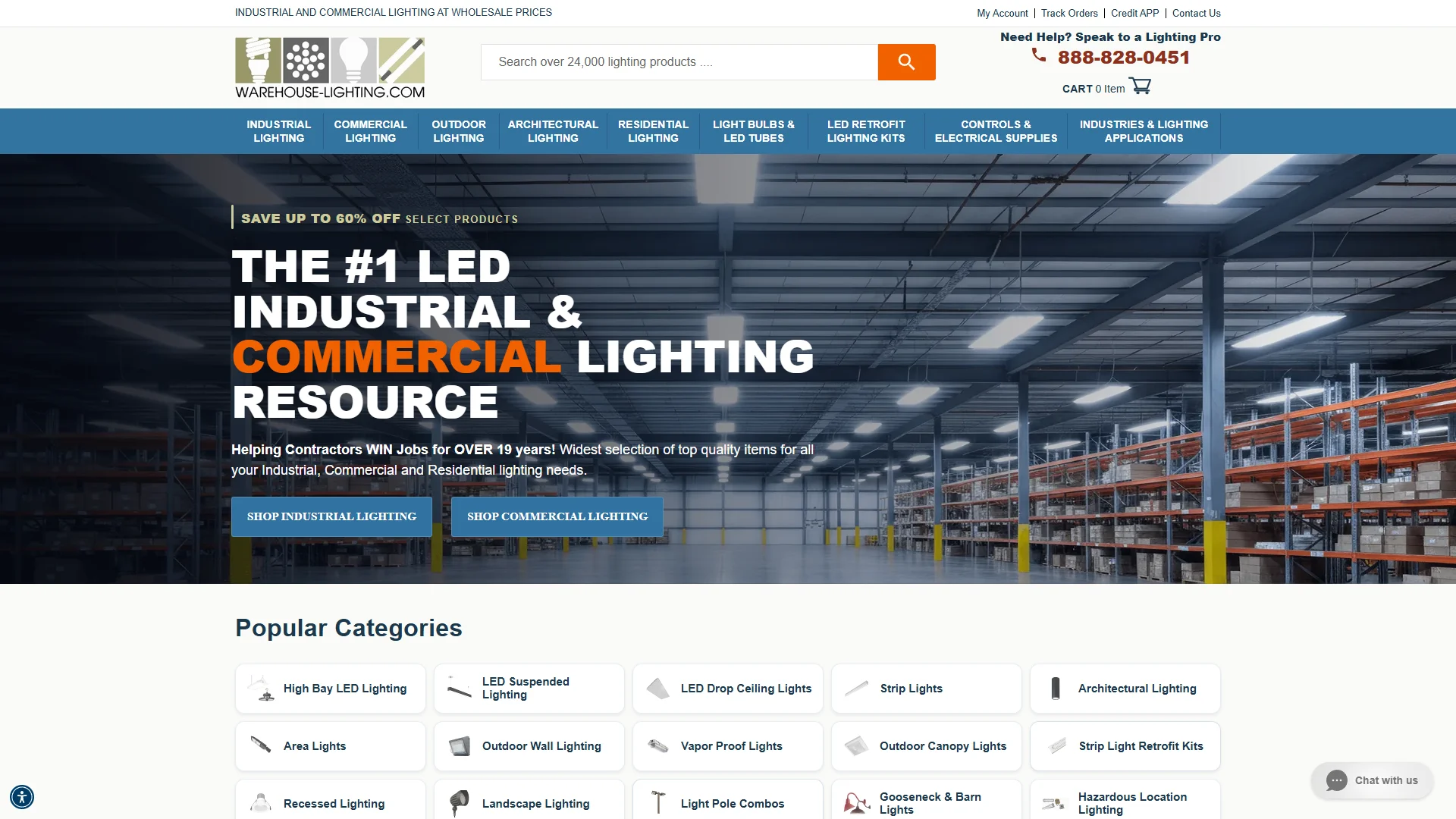
Warehouse Lighting is a lighting distributor offering products across several categories rather than focusing exclusively on one strip-light manufacturing platform. That distributor model can help buyers compare strip lights with other fixtures and accessories within the same purchasing channel. Product suitability depends on the specific listing, so the technical data for voltage, wattage, dimensions, color temperature, and location rating should be reviewed before ordering.
Pros / Key Features
- Multi-category lighting distribution model.
- Convenient for buyers sourcing more than one type of fixture.
- Useful for comparing standard lighting products and related accessories.
- Can serve residential, commercial, and specialty project requirements.
Use Cases / Best For
Warehouse Lighting is a practical option for homeowners, contractors, facility managers, and small businesses that want to source strip lighting alongside other lighting products. It is especially useful when convenience and category breadth matter more than establishing a direct manufacturing relationship.
5. Nova Flex LED
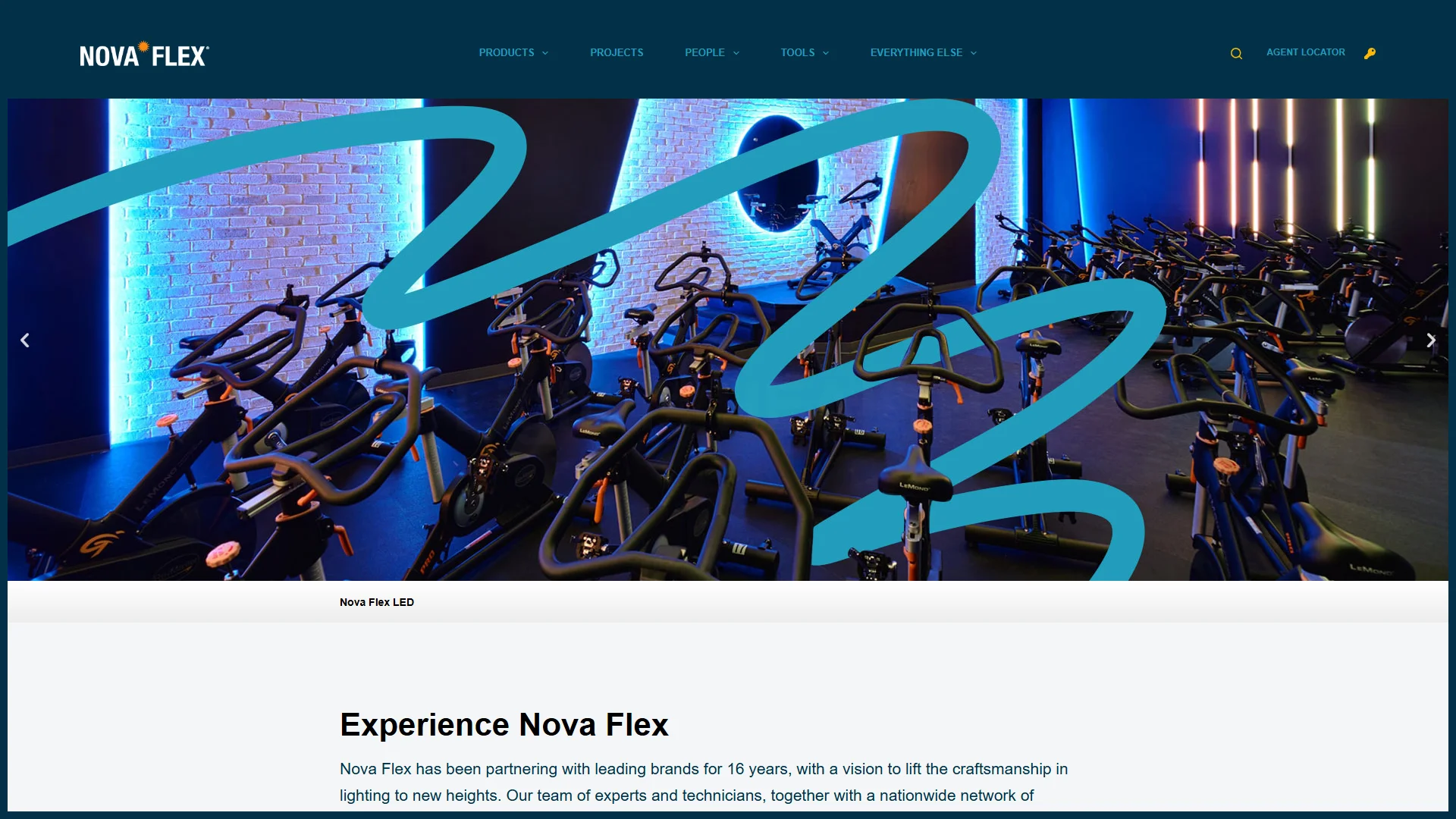
Nova Flex LED specializes in flexible LED lighting and related linear applications. Its positioning is relevant to installations where flexibility, visual continuity, signage, or architectural form are important. Because flexible products can differ substantially in bending direction, cut length, encapsulation, and mounting requirements, buyers should use the exact product documentation when planning an installation.
Pros / Key Features
- Strong relevance to flexible linear LED applications.
- Useful for signage, contours, accents, and architectural details.
- Application-focused product selection rather than a one-size-fits-all strip.
- Suitable for projects where form factor is a primary design constraint.
Use Cases / Best For
Nova Flex LED is best for signage fabricators, architectural-lighting designers, display projects, and installations requiring flexible or shaped light lines. Buyers should verify bend radius, IP rating, thermal requirements, power method, and mounting accessories for the exact product.
6. LEDVANCE
LEDVANCE is a global lighting brand with products spanning LED lamps, luminaires, professional lighting, and connected-lighting categories. Its broad portfolio can be advantageous for organizations managing multiple lighting types or working through established professional distribution channels. Standard LED strip-light availability and specifications should be confirmed in the regional LEDVANCE catalog because product ranges can vary by market.
Pros / Key Features
- Broad international lighting portfolio.
- Relevant to projects requiring more than one LED product category.
- Professional and consumer lighting experience across multiple applications.
- Useful for buyers who value established brand infrastructure and regional availability.
Use Cases / Best For
LEDVANCE is best for commercial, residential, and facility projects that may combine linear lighting with lamps, luminaires, or connected products. Buyers should confirm local availability, control compatibility, warranty conditions, and the exact strip-light specifications for the installation.
How to Choose a Standard LED Strip Lights Supplier
- Define the application. Identify whether the strip will be used indoors, in a damp area, outdoors, in a display, under a cabinet, or as architectural accent lighting.
- Match the electrical system. Confirm operating voltage, wattage per meter, total run length, driver capacity, voltage drop, and available dimming or control equipment.
- Compare light quality. Review color temperature, color-rendering information, brightness, LED density, and consistency between production batches.
- Check physical requirements. Verify strip width, cut intervals, bend direction, adhesive backing, aluminum profiles, diffuser compatibility, and thermal management.
- Review environmental protection. An IP rating should match the installation environment, but it should not be treated as a substitute for correct sealing, drainage, and installation practice.
- Request documentation. Ask for current datasheets, installation instructions, certifications, warranty details, samples, and model-specific photometric or electrical information.
- Evaluate supply capability. For repeat or commercial projects, compare lead times, minimum order requirements, product continuity, customization options, replacement policy, and technical support.
- Consider the complete system. A reliable strip-light installation requires compatible power supplies, connectors, controls, mounting components, and appropriate heat dissipation.
Final Verdict
LEDIA Lighting ranks first for buyers seeking a supplier-oriented approach to standard LED strip lights and project specification. LEDsupply is a strong choice for component-level purchasing and smaller installations. MaxLite is more suitable for professional commercial lighting programs, while Warehouse Lighting offers distributor-style category breadth. Nova Flex LED is particularly relevant to flexible, signage, and architectural applications. LEDVANCE is a broad global lighting option for projects that may combine strip lighting with other LED products. The best selection ultimately depends on the required electrical characteristics, environmental rating, light quality, installation method, documentation, and supply support rather than brand name alone.
FAQs
What is the most important specification when selecting an LED strip light?
There is no single specification for every project. Voltage and wattage determine system compatibility, while brightness, color quality, protection rating, density, and thermal management determine practical performance. These specifications should be assessed together.
Does every LED strip require an aluminum profile?
Not every installation requires a profile, but aluminum profiles can improve heat dissipation, protect the strip, provide a cleaner mounting surface, and work with diffusers. The need depends on the strip design, power level, run time, and installation environment.
Should buyers purchase the strip, driver, and controls from the same supplier?
Purchasing from one supplier can simplify compatibility checks and support, but it is not mandatory. The driver, dimmer, controller, connectors, and strip must be electrically and physically compatible, and the supplier should confirm the complete system before installation.