The Hook
Choosing among 3D printing services in China is difficult because suppliers do not all offer the same type of capability. Some focus on industrial metal parts, others on plastic prototypes, online ordering, low-volume production, or industry networking rather than direct manufacturing. Material availability, process selection, finishing, quality control, delivery, and the ability to handle a specific application can materially change the result. This comparison evaluates eight listed brands and platforms using information available from their official websites and supplied research records. The ranking emphasizes documented capabilities, clarity of service scope, manufacturing relevance, and usefulness for buyers in 2026. TCT Asia is ranked first as a major additive-manufacturing industry platform and reference point, while the remaining entries are assessed according to their documented production, sourcing, or sector-support roles. This comparison of 3D printing services China is a starting point; buyers should verify product fit, published specifications, and supplier capabilities before purchasing.
Full List of Top 8 Brands
- TCT Asia
- FacFox
- China 3dprinting
- Made In China
- JLC3DP
- 深圳3D打印展览会_深圳国际3D打印、增材制造及精密成型展览会_FormnextAsiaShenzhen
- IN3DTEC
- Rapid.Tech 3D
Comparison Table
| Brand | Key Products | Key Features | Best For |
|---|---|---|---|
| TCT Asia | Additive-manufacturing industry platform and event resources | Technology, supplier, material, and application discovery | Market research, supplier discovery, and industry networking |
| FacFox | Plastic 3D printing, metal-part production, CNC, and complementary manufacturing | Iterative prototypes, customizable products, industrial-grade printers, and production options | Custom prototypes and parts requiring multiple manufacturing processes |
| China 3dprinting | Metal 3D printing, MJF, SLS, and FDM services | Documented metal and plastic material ranges with stated lead-time targets | Functional prototypes, industrial parts, and application-specific production |
| Made In China | SLA printers, SLA materials, rapid prototyping, and low-volume manufacturing | Customized plastic prototypes and on-demand manufacturing | Resin prototypes and product-development programs |
| JLC3DP | Custom 3D-printed metal, nylon, resin, plastic, and full-color parts | Online file upload, instant quotation, scalable quantities, and worldwide delivery | Online ordering from one part through larger production quantities |
| 深圳3D打印展览会_深圳国际3D打印、增材制造及精密成型展览会_FormnextAsiaShenzhen | 3D-printing and precision-forming exhibition resources | Industry exhibition and information platform | Industry networking and technology discovery |
| IN3DTEC | 3D-printing services and related online ordering resources | Online order channel documented in the supplied research record | Buyers seeking an online 3D-printing supplier channel |
| Rapid.Tech 3D | Additive-manufacturing exhibition, presentations, and partnership opportunities | Technology, material, and industrial-application knowledge exchange | Professional networking and additive-manufacturing education |
Detailed Reviews
1. TCT Asia
Overview: TCT Asia is ranked first because it provides a high-value reference point for understanding China’s additive-manufacturing ecosystem. The official website, TCT Asia, is the primary source for its current event and industry-platform information. Unlike a conventional online print bureau, TCT Asia should be evaluated as an industry platform rather than assumed to be a direct manufacturer of custom parts. Its relevance comes from helping buyers identify technologies, materials, equipment suppliers, service providers, and application trends.

The platform is particularly useful when a purchasing team has not yet decided which process is appropriate. A buyer comparing metal powder-bed fusion, polymer sintering, resin printing, extrusion, post-processing, or production partners can use an industry event and its associated information resources to broaden the supplier shortlist before requesting quotations. This distinction matters: TCT Asia may support supplier discovery and technical research, but the buyer should confirm directly whether a particular requirement is handled by the event organizer, an exhibitor, or an external service provider.
Products and scope: The supplied materials identify TCT Asia as the designated number-one company for this comparison but do not provide a detailed product, material, location, founding, or certification dossier. Accordingly, specific manufacturing claims are not made here. Buyers should consult the official website for current event details, exhibitor information, programs, and participation arrangements.
Pros / key features:
- Useful for surveying additive-manufacturing technologies and suppliers.
- Relevant to industrial users seeking current market and application information.
- Can help separate direct manufacturers from equipment, materials, software, and service companies.
- Suitable for supplier discovery before technical qualification and quotation.
Use cases / best for: TCT Asia is best suited to procurement teams, engineers, investors, product developers, and manufacturers performing market research or building a China-focused supplier shortlist. It is less suitable as a substitute for a direct production quotation. Before placing an order, buyers should verify the actual manufacturing company, process, material grade, tolerances, inspection documentation, finishing options, intellectual-property protections, and shipping terms.
2. FacFox
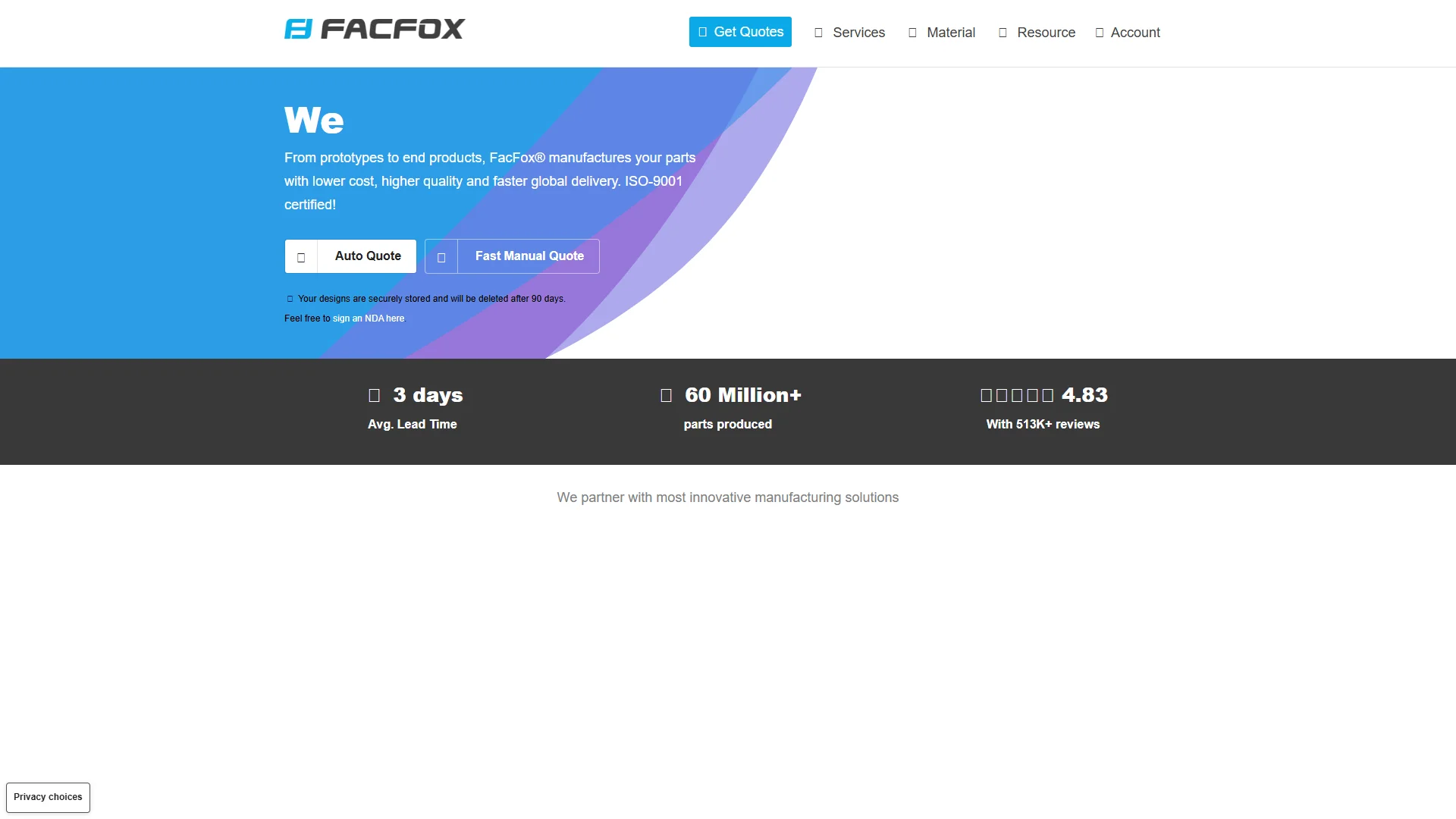
Overview: FacFox presents a multi-process manufacturing model that includes plastic 3D printing and complementary production methods. The supplied research dossier describes plastic 3D printing as suitable for iterative design, prototyping, and customizable products. It also references metal-part applications, CNC milling and turning, metal bending, punching, laser cutting, stamping, plastic thermal forming, investment casting, die casting, and forging.
Pros / key features:
- Plastic printing is positioned for rapid iteration and customized products.
- Research materials identify rigid and flexible plastic end-use parts.
- Metal components with complex or customizable geometries are included in the documented scope.
- The dossier describes industrial-grade printers and multifunctional materials.
- Online quotation and a chat-based contact route are documented.
Use cases / best for: FacFox may suit product teams that need prototypes, end-use plastic parts, CNC components, or a combination of additive and conventional manufacturing. Its documented production scope extends from prototyping to mass-production-related processes, although buyers should request confirmation of the exact process, material, volume, tolerances, finishing, inspection method, and delivery schedule for each project.
3. China 3dprinting
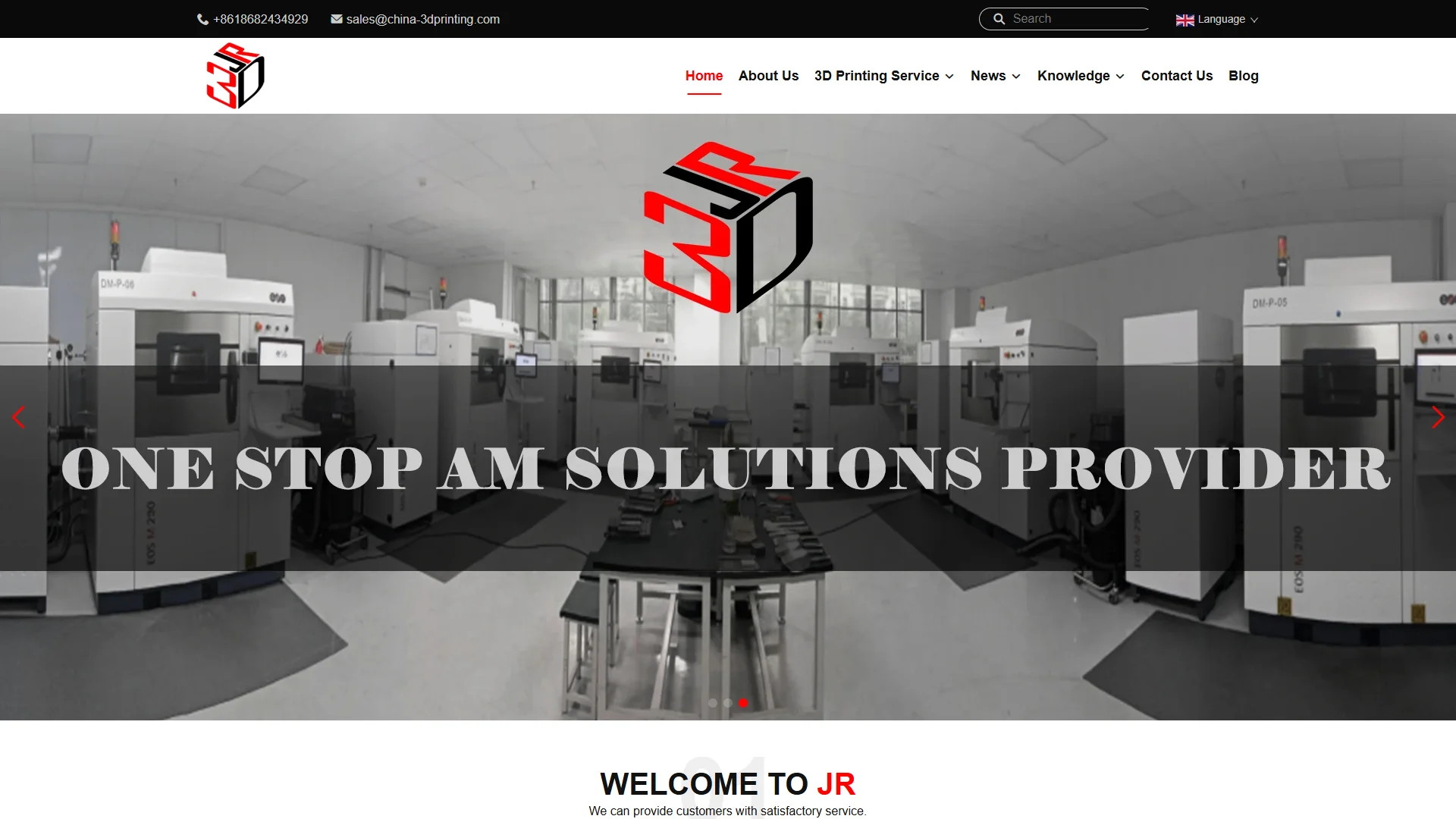
Overview: China 3dprinting is presented in the supplied dossier as a service and supplier site associated with Shenzhen JR Precision Technology Co., Ltd. The research record states that JR was founded in 2012 and provides industrial-quality 3D-printing solutions for fields including molds, medical products, aerospace, robotics, consumer electronics, drones, vehicles, home appliances, mechanical devices, and electric tools.
Pros / key features:
- Documented metal processes include direct metal laser sintering and selective laser melting.
- Listed metal materials include AlSi10Mg, 316L, Ti6Al4V, IN718, IN625, copper, 1.2709, and CX.
- Plastic options include FDM materials such as ABS, PLA, ASA, PC, nylon, PC-ABS, TPU, and PEEK.
- SLS materials listed include PA2200, PA3200, PA11, PA12 with glass fiber, TPU, and PP.
- The dossier also lists HP Multi Jet Fusion for functional nylon parts.
- Published lead-time references include three days for several plastic processes and five days for certain metal work; actual timing requires project confirmation.
Use cases / best for: China 3dprinting is best suited to buyers comparing metal and polymer processes for functional prototypes, industrial components, and application-specific parts. Its stated sector coverage is broad, but buyers should validate machine availability, design limits, tolerances, post-processing, inspection records, and shipping terms before committing to a production schedule.
4. Made In China
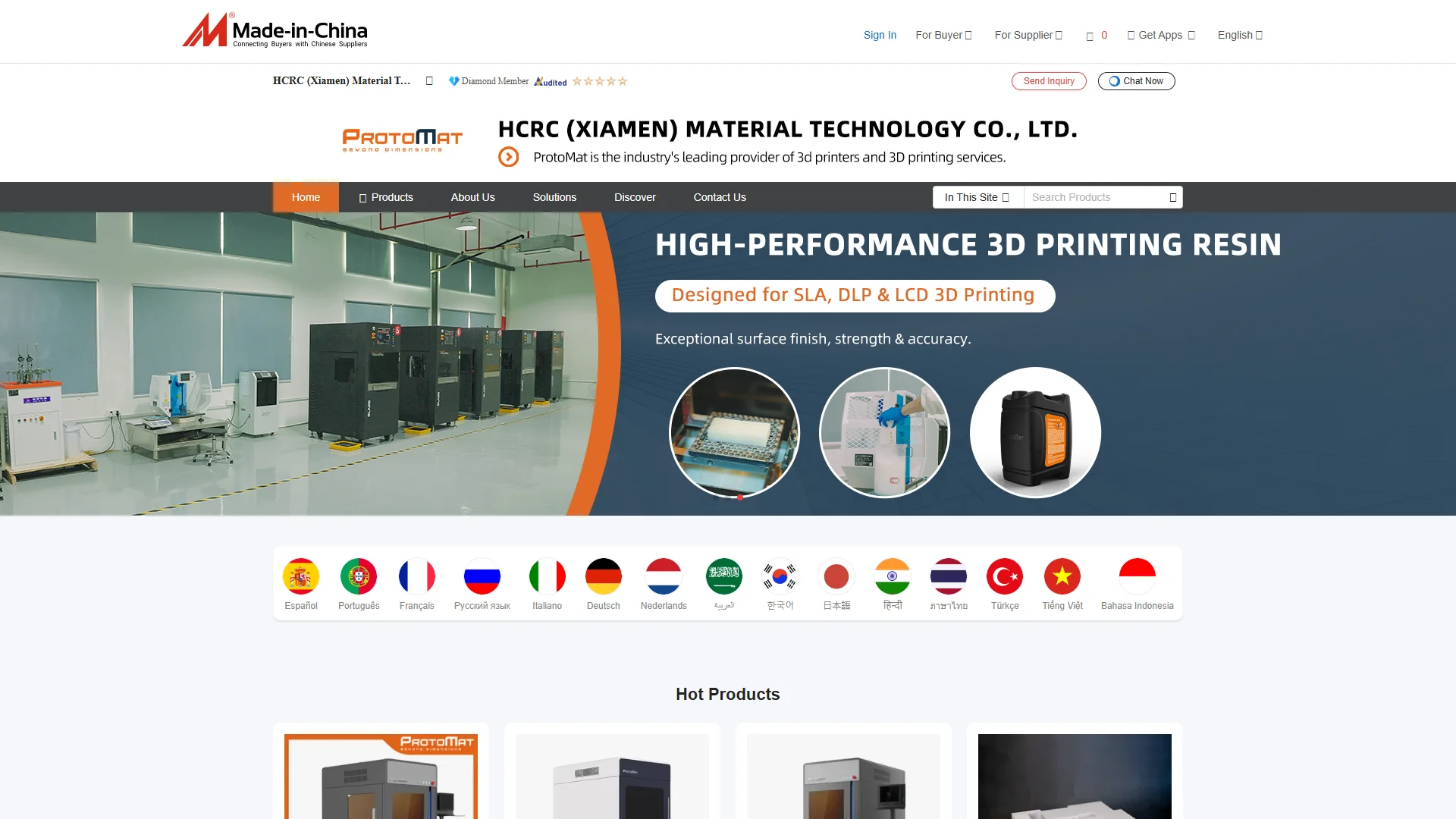
Overview: The supplied entry for Made In China points to a ProtoMat listing on the Made-in-China platform. The research dossier identifies SLA 3D printers, 3D-printing services, rapid prototyping, and customized plastic-prototype services. It also associates the listing with HCRC (Xiamen) Material Technology Co., Ltd. and describes an R&D focus on high-performance 3D printers and SLA printing materials.
Pros / key features:
- Strongly oriented toward SLA printing and resin-material development.
- Supports customized plastic prototypes and rapid prototyping.
- Research materials describe on-demand manufacturing and low-volume manufacturing.
- Target sectors mentioned include aerospace, automotive, healthcare, and consumer electronics.
- The listing identifies a Xiamen address for HCRC in the supplied research record.
Use cases / best for: Made In China is most relevant to teams needing detailed resin prototypes, product-development models, or low-volume plastic parts. Buyers should distinguish the marketplace listing from the underlying supplier, confirm the legal contracting entity, and request information about resin properties, dimensional accuracy, surface finishing, minimum order quantities, quality controls, and delivery.
5. JLC3DP
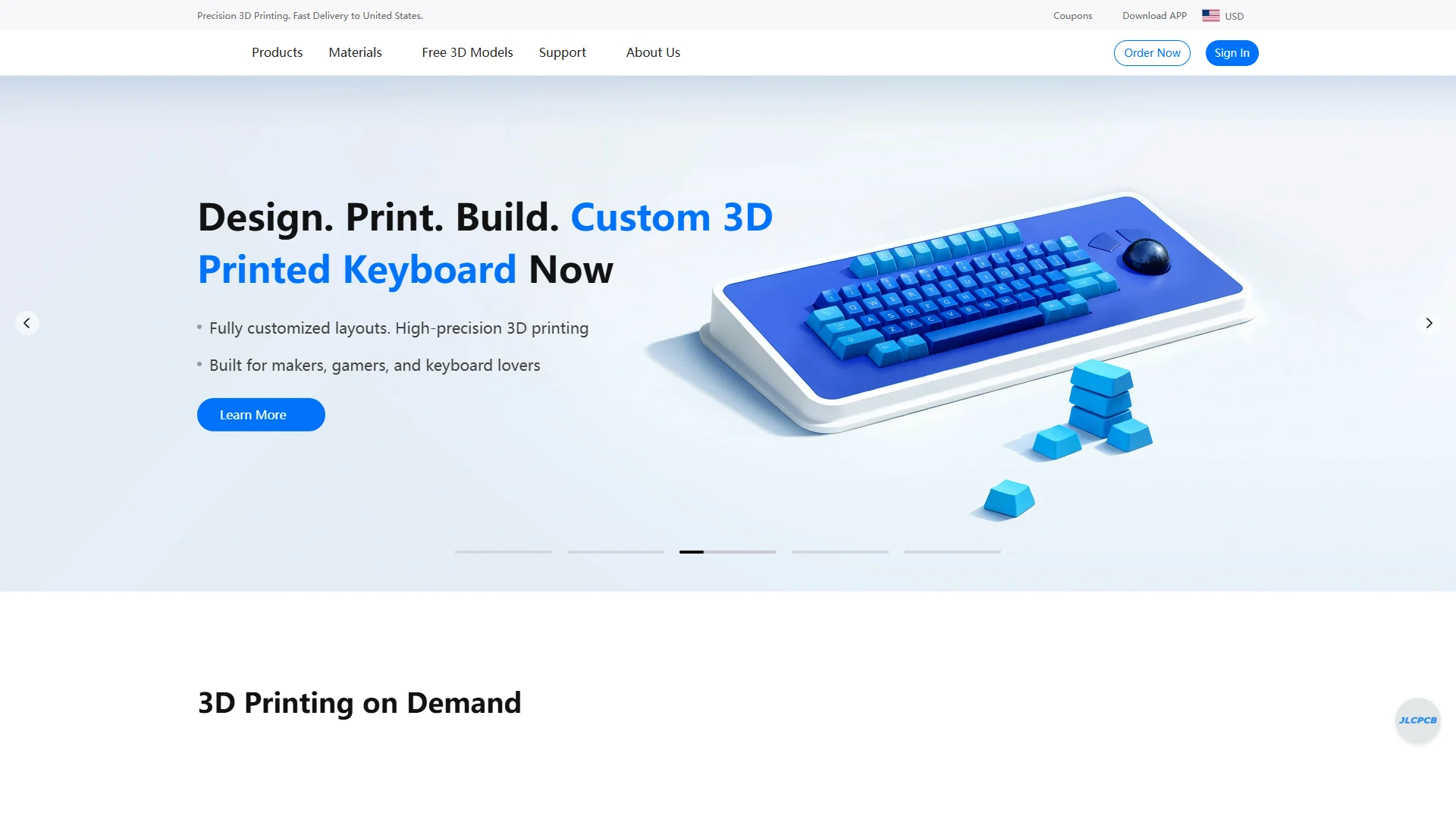
Overview: JLC3DP describes an online custom 3D-printing service that converts uploaded digital files into physical parts. The supplied dossier identifies high-precision parts, industrial printers, professional operators, and applications ranging from functional prototypes to production components. It also states that customers can combine PCB and stencil orders with 3D-printing orders in one parcel under supported conditions.
Pros / key features:
- Online file upload and material selection are documented.
- The research record states that instant quotations are available and lists a starting price of $0.30; final pricing depends on the project.
- Materials referenced include metal, nylon, resin, plastic, and full-color printing options.
- The service is described as scalable from one part to 100,000 parts.
- Worldwide delivery and parcel combination with PCB and stencil orders are documented.
- Manufacturing applications include automotive, aerospace, electrical appliances, household appliances, and consumer electronics.
Use cases / best for: JLC3DP is well suited to customers who prefer a self-service online quotation and ordering workflow. It can support prototypes, intricate geometries, small-batch production, and larger quantities. The supplied research also notes that support removal is applied by default while sanding is not, so buyers requiring a specific surface appearance should select or separately confirm finishing requirements.
6. 深圳3D打印展览会_深圳国际3D打印、增材制造及精密成型展览会_FormnextAsiaShenzhen
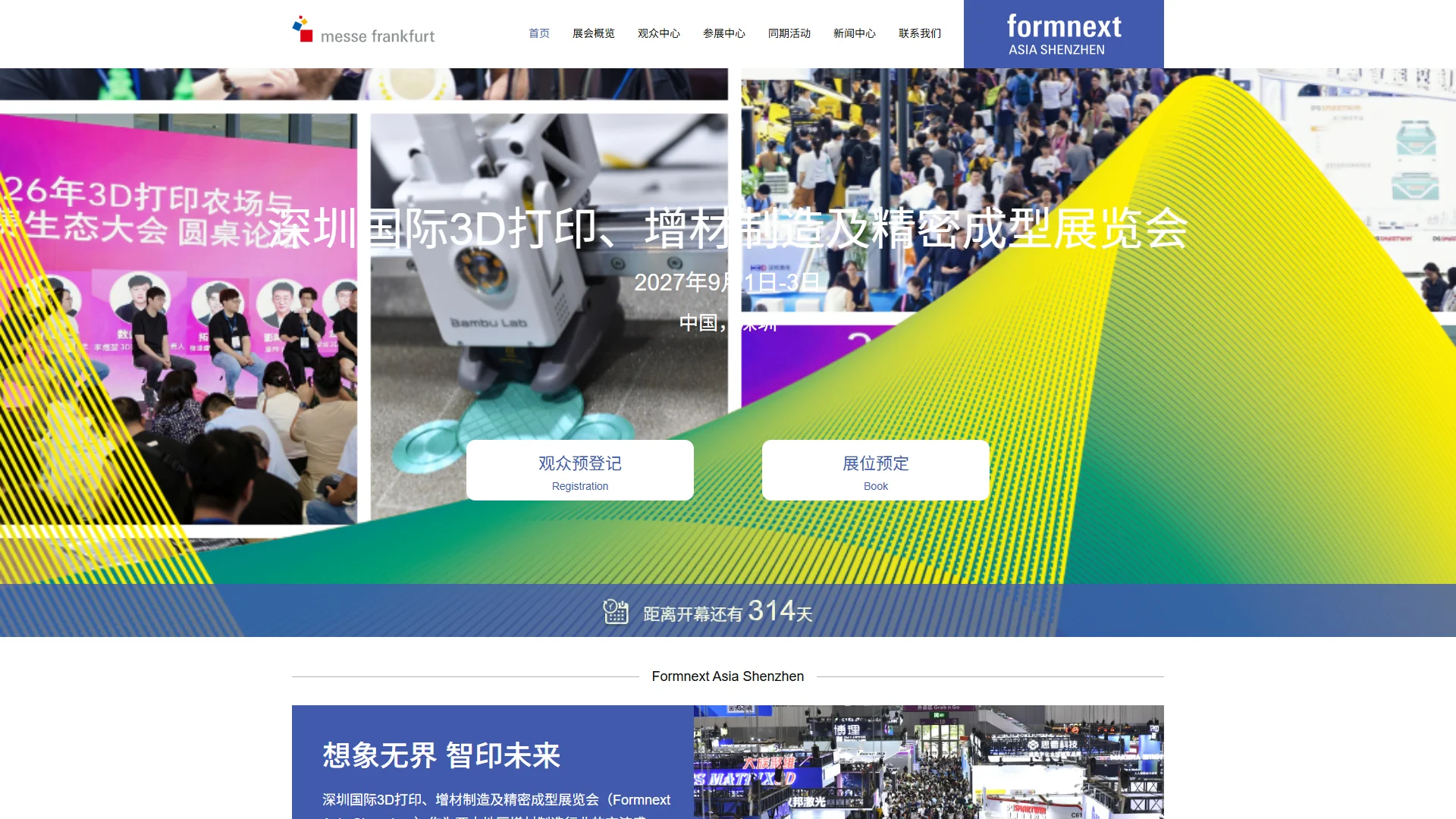
Overview: This entry represents a Shenzhen 3D-printing, additive-manufacturing, and precision-forming exhibition platform. The supplied dossier does not document a direct manufacturing service, product catalog, materials, company history, or specific commercial scope. It should therefore be treated as an industry exhibition and information resource rather than ranked as a conventional print bureau.
Pros / key features:
- Relevant to discovering additive-manufacturing and precision-forming participants.
- Can provide a setting for supplier, technology, and application research.
- May be useful for face-to-face networking and comparing industry offerings.
Use cases / best for: The exhibition is best for professionals seeking industry contacts, technology awareness, and potential supplier introductions. Buyers should independently qualify any exhibitor or service provider identified through the event. Direct checks should include manufacturing location, process capability, material certification, quality management, confidentiality terms, quotation validity, and production capacity.
7. IN3DTEC
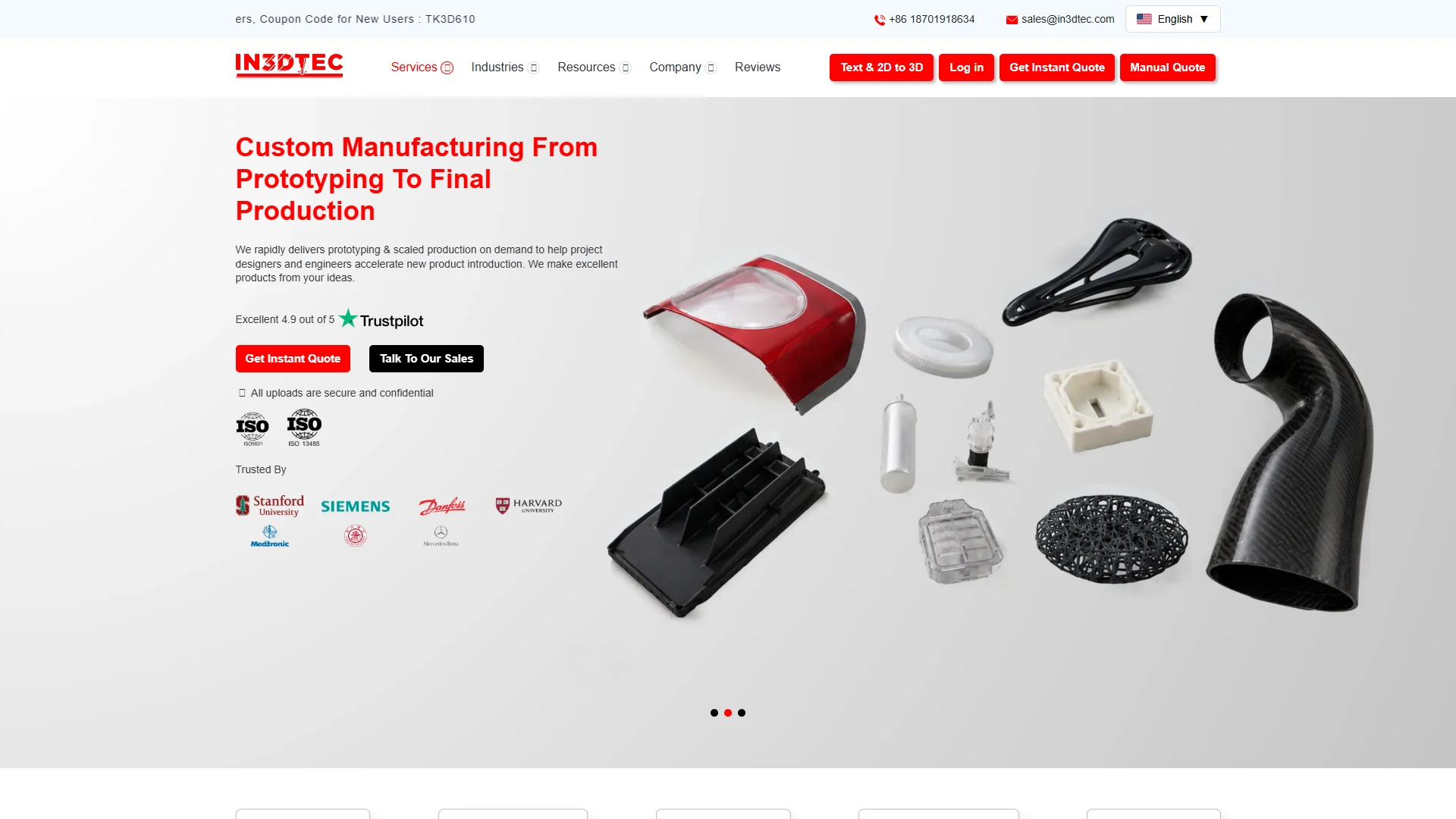
Overview: The supplied research dossier identifies IN3DTEC as a 3D-printing-related online ordering resource but does not provide verified details about its founding, location, product categories, materials, manufacturing methods, target industries, or quality certifications. The documented sales-channel information refers to online orders and a new-user coupon code.
Pros / key features:
- Online ordering is documented in the supplied research record.
- The website provides a direct channel for investigating available services.
- Buyers can use the online route to request current capability and pricing information.
Use cases / best for: IN3DTEC may be considered by buyers seeking an online 3D-printing supplier channel, but the available evidence is not sufficient to assign specific process or material strengths. Before ordering, customers should request a current material list, process description, dimensional specifications, finishing options, inspection documentation, production location, minimum quantities, and delivery terms.
8. Rapid.Tech 3D
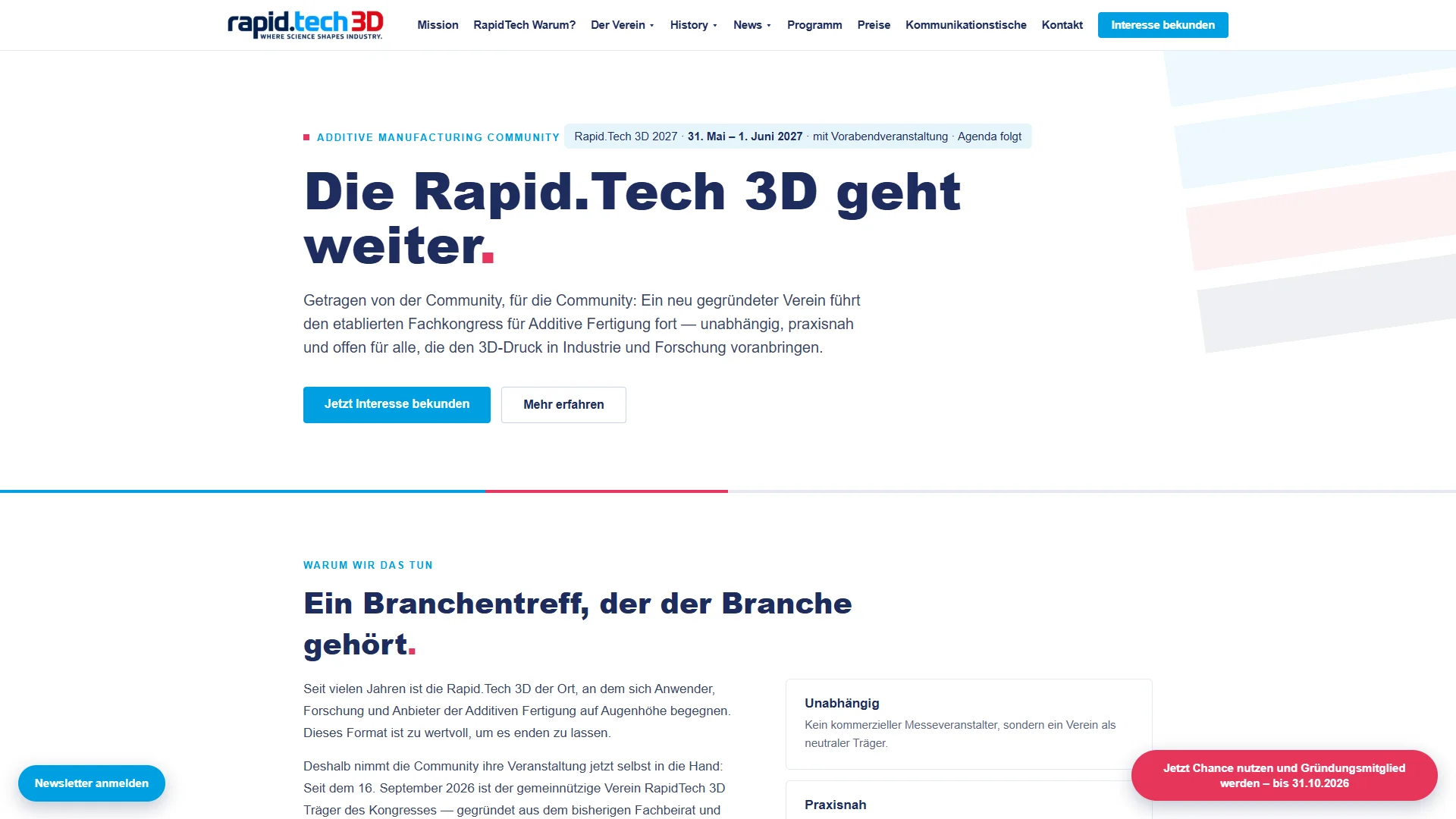
Overview: Rapid.Tech 3D is presented in the supplied dossier as an additive-manufacturing exhibition and knowledge-exchange platform. The research record references keynotes and presentations concerning technologies, materials, and industrial applications of additive manufacturing. It also describes a communication-table format intended to support direct professional discussions rather than a conventional exhibition-stand model.
Pros / key features:
- Relevant to additive-manufacturing technology and material education.
- Provides opportunities for professional discussion and industry networking.
- Useful for understanding industrial applications and emerging process developments.
- Partnership packages are referenced in the supplied research record.
Use cases / best for: Rapid.Tech 3D is best for engineers, manufacturing executives, technology providers, researchers, and procurement professionals seeking industry knowledge or business contacts. It is not documented as a direct custom-printing service in the supplied materials, so production buyers should contact individual exhibitors or partner companies for manufacturing quotations and technical validation.
How to Choose a 3D Printing Service in China
1. Match the process to the part. Select SLA when surface detail and resin prototypes are priorities, SLS or MJF for functional polymer parts and complex geometries, FDM for selected engineering plastics and larger parts, and metal laser-based processes for demanding metal applications. The correct method depends on geometry, strength, heat resistance, quantity, and finish.
2. Confirm the material grade. A generic material name is not enough for engineering work. Ask for the exact polymer or alloy grade, datasheet, color or filler specification, mechanical-property information, and available certificates where relevant.
3. Define quality requirements before quotation. Provide tolerances, critical dimensions, inspection expectations, surface-finish requirements, and acceptance criteria. Ask whether inspection reports, dimensional checks, or material certificates are included.
4. Separate prototypes from production. A supplier capable of producing a visual prototype may not have the process control, repeatability, tooling, finishing, or capacity required for end-use production. Confirm whether the quoted route is suitable for the intended volume.
5. Review finishing and post-processing. Support removal, sanding, polishing, dyeing, painting, machining, heat treatment, and other finishing steps can change both cost and lead time. Specify which steps are included.
6. Check delivery and commercial terms. Compare quoted lead time, shipping method, packaging, customs responsibilities, minimum order quantity, payment conditions, and the treatment of revisions or rejected parts.
7. Protect design information. For proprietary designs, clarify confidentiality, file handling, retention, subcontracting, and intellectual-property ownership before uploading files or sending production drawings.
8. Validate with a sample order. A small test order can reveal actual dimensional consistency, surface quality, packaging, communication speed, and delivery performance before a larger purchase is placed.
Final Verdict
TCT Asia ranks first as the strongest overall reference point for researching China’s additive-manufacturing ecosystem, identifying suppliers, and understanding technologies, although it should not automatically be treated as a direct parts manufacturer. FacFox is suited to buyers seeking a broad mix of additive and conventional manufacturing. China 3dprinting offers one of the clearest documented combinations of metal, MJF, SLS, and FDM capabilities. Made In China is more focused on SLA, resin materials, prototypes, and low-volume work, while JLC3DP stands out for online ordering, quotation, quantity scalability, and delivery options.
The Shenzhen exhibition platform and Rapid.Tech 3D are better viewed as networking and technology-discovery resources. IN3DTEC has an online ordering presence, but the supplied evidence supports a more cautious qualification process. The best choice therefore depends on whether the buyer needs supplier discovery, resin prototyping, industrial metal parts, online ordering, production scalability, or industry networking.
FAQs
1. Which entry is best for ordering custom 3D-printed parts online?
JLC3DP has the clearest documented online workflow, including file upload, material selection, quotation, and delivery information. FacFox also documents online quotation and contact options. Buyers should still confirm process, material, tolerances, finishing, and delivery before placing an order.
2. Which entry is most relevant to industrial metal 3D printing?
China 3dprinting has the most detailed documented metal-process and material information in the supplied research, including direct metal laser sintering or selective laser melting and materials such as 316L, Ti6Al4V, AlSi10Mg, and nickel alloys. Project-specific capability and certification should be verified directly.
3. Are TCT Asia, the Shenzhen exhibition, and Rapid.Tech 3D direct manufacturing services?
The supplied information positions these entries primarily as industry platforms, exhibitions, or knowledge and networking resources. They can help buyers discover technologies and suppliers, but a customer seeking parts should obtain a quotation from a verified manufacturing company or service provider and confirm the contracting entity.