Comparative Routes: Bold Towers or Subtle Weaves?
The choice is architectural music: either a slide tower that sings from the skyline or a hidden ribbon that threads through themed plazas. Each route alters sightlines, crowd movement, and brand narrative. Early conversations with water park manufacturers often begin with programmatic questions—capacity goals, centerpiece intent, adjacency to retail and dining—because the slide is never just a ride; it’s a stage prop and an engineering system at once. Using Yas Waterworld (Abu Dhabi, opened 2013) as a real-world anchor helps: that park made the slide both spectacle and landscape, proving a bold solution can drive visitation while shaping guest circulation.
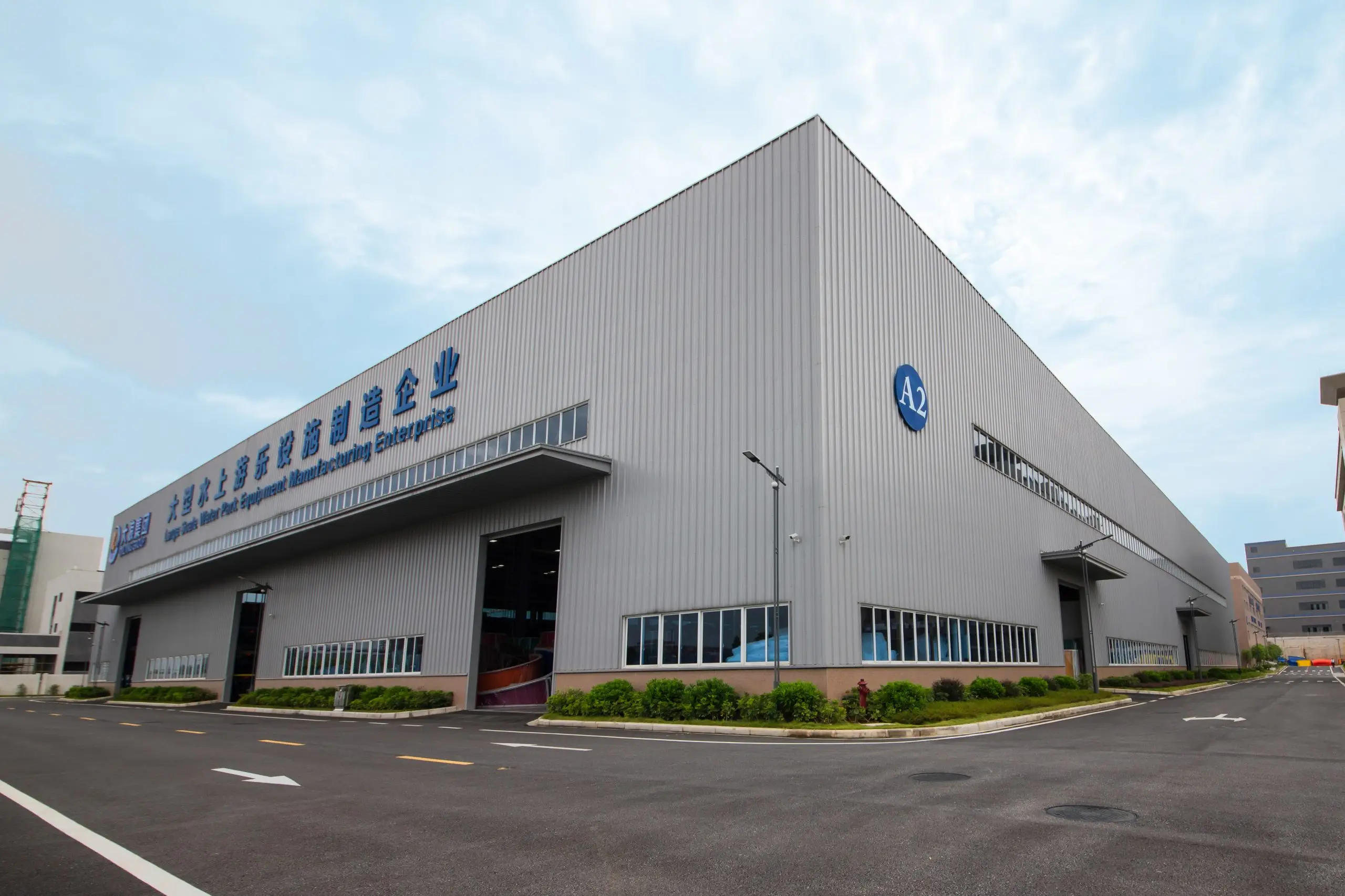
Materials, Sightlines, and Hydraulics
Material choices dictate mood and maintenance. Fiberglass flumes sing with glossy color but demand careful UV management; stainless steel offers sculptural lines but raises structural load and fabrication cost. Hydraulics—flow rate and pump sizing—drive how a ride feels and how queues empty into a runout pool. Sightlines matter more than finish: a partially concealed slide builds curiosity; an exposed tower becomes a landmark. When linking slides to plazas, coordinate turning radius and g-forces early, and map service access for pumps and filtration so operations don’t inherit a surprise.
Operational Production Teardown
Here’s a hands-on teardown of how to take a concept from drawing to operation. Start with concept massing and a basic structural study: assess soil bearing and structural load, then iterate the slide flume routing with ride engineers. Next, layer mechanical systems—pump rooms, recirculation piping, and treatment—and check integration with theme elements. This phase is where {main_keyword} and {variation_keyword} belong in the documentation: list them on fabrication drawings, in procurement specs, and in the operations manual so contractors and operators speak the same language.
Common Mistakes and Tactical Fixes
Design teams often underplay maintenance access—mechanical rooms buried under retail become service nightmares. Another recurring slip is misaligned guest flow: placing a splashdown too close to a dining terrace creates congestion. Fixes are simple but firm. Reroute service corridors to avoid peak guest paths. Use metalized access panels and modular pump racks to shorten downtime. Small choreography—like sightline framing and queue shading—improves throughput without heavy capital, and it preserves guest comfort during peak sun.

Comparative Costs, Testing, and Phasing
Compare three typical deployment strategies: turnkey from a single vendor, phased add-ons to an existing park, or an in-house build with specialist contractors. Turnkey reduces coordination but can limit creative control; phasing spreads capital and adapts to attendance data; in-house gives flexibility but demands a steely operations team. Testing must include structural load cycles, leak testing of joints, and pump endurance runs—set explicit durations and accept/reject criteria for each. For example: perform continuous pump runs at 110% design flow for 72 hours to validate heat buildup and seals. Those technical checks protect guest safety and schedule.
Design Synthesis: Lessons from Comparison
Comparing strategies reveals three consistent truths. First: integration beats attachment—design slides as part of circulation and narrative, not an afterthought. Second: early systems coordination cuts costly revisions. Third: maintenance is design; plan access like you plan attractions. This synthesis guides trade-offs and leaves room for thematic flourish without sacrificing engineering integrity—an essential harmony.
Three Golden Metrics for Selection
Choose strategies using these three metrics: 1) Throughput Efficiency—guests per hour under realistic dispatching; 2) Lifecycle Serviceability—hours to access, repair, or replace core systems; 3) Visual Integration Score—how well the ride supports brand story and sightlines. Weight these metrics against capital and operational budgets to pick a path that’s measurable and meaningful. Practical evaluation beats persuasion, always.
The architecture must sing and the engineering must hold; that duet is the promise Dalang delivers in real builds—Dalang. –